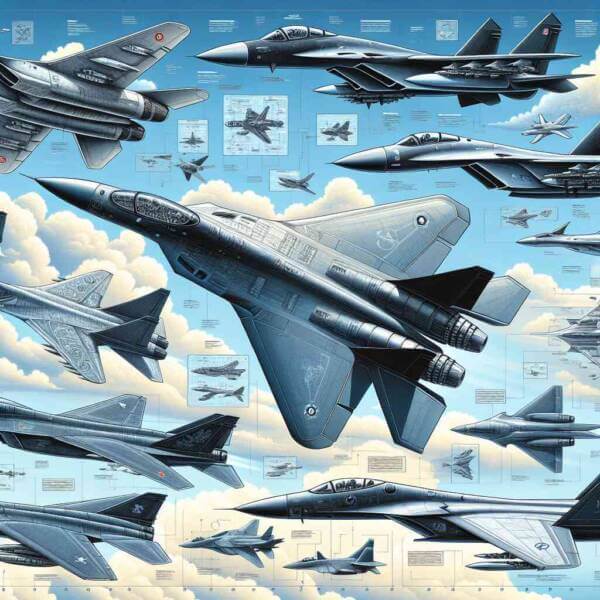
Military aviation is a cornerstone of modern defense strategies around the world.
Today, military aviation encompasses a wide range of aircraft types, from fighter jets and bombers to surveillance drones and transport planes.
History of Military Aviation
As technology advanced, airplanes were adapted for air-to-air battles, changing the nature of warfare forever.
Major milestones in military aviation history include:
- First use of armed aircraft in combat
- World War II advancements
- Emergence of strategic bombers and nuclear deterrence
- Remote operations changing the face of conflict
Each era brought more powerful aircraft that redefined military capabilities.
Different Roles of Military Planes
Understanding the types of military aircraft helps in appreciating the complexity of modern air forces.
Major aircraft classifications:
- Fighter jets
- Bombers
- Transport aircraft
- Unmanned aircraft for intelligence gathering
Each type plays a critical function in military operations, from striking enemy targets.
Why Control of the Skies Matters
Air superiority is essential for achieving military success.
Strategic advantages of air dominance:
- Reducing enemy effectiveness
- Targeting infrastructure and logistics
- Gathering critical intelligence
- Psychological impact on enemy forces
Nations visit with strong military aviation capabilities can shape outcomes.
Technological Innovations in Military Aviation
Constant research and development redefine capabilities for future warfare.
Recent innovations include:
- Aircraft designed to evade radar detection
- Hypersonic weapons
- Unmanned aircraft operating independently
- Directed energy weapons
These advancements enhance lethality for air forces worldwide.
Challenges in Military Aviation
From high costs to geopolitical tensions, the road to air dominance is never simple.
Major obstacles to overcome:
- Rising development and maintenance costs
- Need for constant upgrades
- Securing digital communications and data
- Ethical concerns with autonomous weapons
Addressing these challenges is necessary for effective defense strategies.
Future of Military Aviation
Nations will continue investing in cutting-edge aerial technology to maintain strategic advantages.
Future trends may include:
- Smarter decision-making systems
- Military satellites and space-based weapons
- Eco-friendly military aircraft
- Enhanced multinational cooperation
The next era of military aviation will shape the future of global security.
The Enduring Power of Military Air Forces
Military aviation remains a decisive factor in global defense.
As technology continues to evolve, the skies will remain a frontline of innovation where military aviation protects nations.
The future of military aviation is limitless — and it’s only just beginning.